

International IoT Day 2026: how IoT eSIM is shaping the future of enterprise IoT connectivity
April 9, 2026
International IoT Day: from idea exchange to global movement
Each year on 9 April, International IoT Day offers a moment to reflect on how far the Internet of Things has come and where it is heading next.
What began in 2010 as an initiative by the IoT Council to encourage discussion around emerging IoT topics has grown into a global movement. Today, it is recognised across hundreds of locations worldwide, from informal meetups and universities to industry events and online communities. More importantly, it has become a meaningful checkpoint for the industry, offering space to reflect not just on innovation, but on real progress.
In 2026, one theme is clear. Connectivity has moved to the centre of the IoT value chain.
IoT is maturing and enterprise IoT connectivity is no longer a commodity
In the early days of IoT, the objective was simple. Connect devices, collect data and demonstrate value. Enterprise IoT connectivity was essential, but often treated as a background utility.
That is no longer the case.
As deployments expand across industries and geographies, enterprise IoT connectivity has become a strategic layer that directly impacts performance, resilience and long-term success. Businesses are no longer managing a few hundred devices in controlled environments. They are operating thousands of endpoints across multiple countries, networks and regulatory conditions.
In this context, reliability, control and consistency are expected. Even minor connectivity issues can have a direct operational impact.
The conversation has therefore shifted. It is no longer just about connecting devices. It is about ensuring they remain connected, securely and reliably, throughout their lifecycle. Enterprise IoT connectivity is no longer a commodity. It is critical infrastructure.
IoT eSIM and SGP.22: supporting deployments today
One of the key technologies enabling this shift is IoT eSIM, particularly through the GSMA SGP.22 specification.
SGP.22 introduced remote SIM provisioning, allowing operator profiles to be delivered and managed over the air. This removes the need to physically access devices to change connectivity, which has historically been a major barrier in large scale IoT deployments.
In practical terms, IoT eSIM changes how enterprise IoT connectivity is deployed. Devices can be shipped globally with a single SIM and configured remotely once installed. Connectivity can be adjusted as requirements evolve, without the need for on site intervention.
Today, IoT eSIM based on SGP.22 is widely used across sectors such as EV charging, smart metering, industrial automation and logistics. It provides a strong and proven foundation for enterprise IoT connectivity, enabling organisations to scale with greater flexibility and control.
Looking ahead: SGP.32 and the next phase of IoT eSIM
As the industry evolves, attention is turning to the next phase of IoT eSIM.
SGP.32 has been designed specifically for IoT environments where devices operate independently and at scale. These deployments often involve devices without user interaction, operating in constrained environments and expected to perform reliably over many years.
The key difference lies in how enterprise IoT connectivity is managed. SGP.32 introduces a more centralised and automated approach, allowing organisations to manage large fleets of devices more efficiently. Provisioning becomes more streamlined, lifecycle management more efficient and deployments easier to scale.
Importantly, SGP.32 does not replace SGP.22. Instead, it builds on it. SGP.22 continues to support today’s enterprise IoT connectivity needs, while SGP.32 introduces capabilities that will become increasingly important as IoT expands globally.
Why enterprise IoT connectivity models matter more than ever
As IoT becomes embedded in business critical operations, the way enterprise IoT connectivity is delivered is under greater scrutiny.
Organisations are looking for consistency across regions, greater visibility and stronger control over how devices connect and behave. They need assurance that connectivity will remain stable regardless of location or network conditions.
This has brought increased focus on the underlying connectivity model. Providers that operate their own mobile network infrastructure are better positioned to deliver consistent enterprise IoT connectivity, with greater control over performance and long term reliability.
melita.io: delivering enterprise IoT connectivity at global scale
At melita.io, this is the direction we are actively building towards.
As a mobile network operator, we bring direct network capabilities into the IoT space, enabling a higher level of control, transparency and reliability for enterprise IoT connectivity. In contrast to models where connectivity is layered on top of third party infrastructure, operating as a mobile network operator allows for greater control over performance, resilience and long term service quality.
Our approach is designed around flexibility and resilience. We support multiple access technologies, from 2G through to 5G, including NB IoT and LTE M, ensuring IoT eSIM deployments can operate across a wide range of use cases and power requirements.
This is combined with multi network capabilities, allowing devices to automatically connect to the strongest available signal. With built in failover, enterprise IoT connectivity remains stable even when network conditions change.
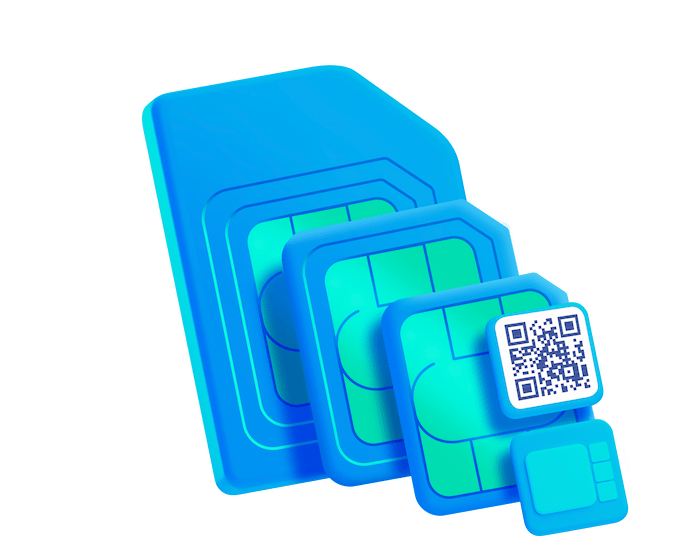
We also support multiple SIM form factors, including traditional SIMs and IoT eSIM, allowing businesses to align connectivity with their device design and long term strategy.
With coverage across more than 185 countries and over 300 networks, our focus is on delivering resilient and reliable enterprise IoT connectivity that performs consistently across global deployments.
With the launch of our IoT eSIM based on SGP.22, we are enabling faster deployment through remote provisioning, while maintaining the flexibility to scale and adapt as requirements evolve.
Looking ahead, as SGP.32 becomes commercially available, we will continue to evolve our platform to support more automated, large scale IoT eSIM deployments, without compromising on reliability or control.
International IoT Day as a reflection of progress
International IoT Day has evolved alongside the industry it represents. What began as a platform for discussion has become a reflection of progress and direction.
In 2026, the message is clear. IoT is no longer defined by the number of connected devices, but by the quality of the enterprise IoT connectivity that supports them.
IoT eSIM, through SGP.22 and the emerging SGP.32 standard, is central to this shift. Together, they are enabling more flexible, resilient and scalable enterprise IoT connectivity models.
As IoT continues to grow, success will depend not just on innovation, but on execution. And at the heart of that execution is connectivity that works reliably, wherever and whenever it is needed.
To celebrate International IoT Day and the launch of melita.io eSIM, take advantage of a limited-time promotion on all eSIM profile orders placed throughout April 2026, enabling faster deployments and more efficient scaling of global IoT connectivity.
Existing customers can order eSIMs directly via the melita.io portal, with 50% off initial fees on orders of 100 or more new eSIM profiles. New customers can request a technical consultation at www.melita.io/contact.
Source
GSMA
https://www.gsma.com/solutions-and-impact/technologies/esim/
GSMA eSIM architecture
https://www.gsma.com/solutions-and-impact/technologies/esim/about/
Teltonika Networks
https://www.teltonika-networks.com/newsroom/understanding-the-esim-technology-and-unlocking-its-power-with-rms
Get started now with our IoT SIM plans
Our competitive data rates are designed for businesses operating across Europe, the UK, the USA, China and beyond — without any additional roaming fees.
IoT SIM
€5 per GB pay per use in over 60 countries
Optional eSIM with activation via QR code or LPA URL
Lifetime IoT SIM
1 GB, 100 SMS
10 years for a one-time fee of €10