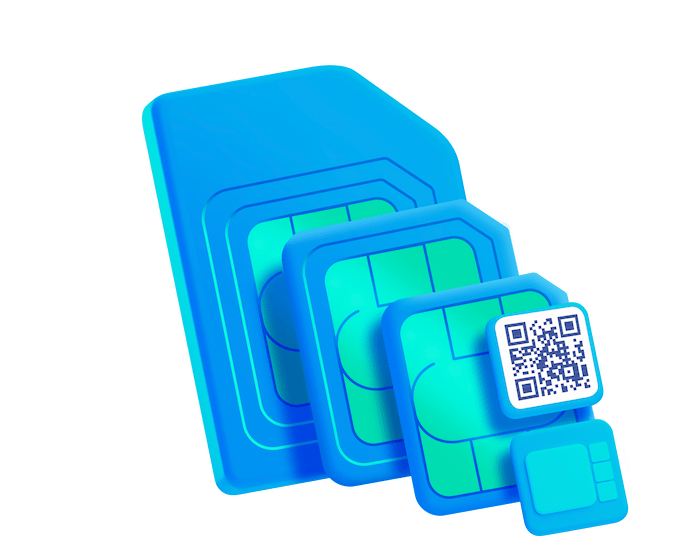


What is eSIM? Understanding the terminology and technology behind it
The term eSIM has become a buzzword in the telecom and IoT industries, but what does it really mean? eSIM stands for Embedded SIM, a GSMA-defined standard that replaces the need for physical SIM cards with a programmable chip embedded directly into a device. This innovation is transforming how we connect, manage, and scale mobile networks globally.
Key terminology explained:
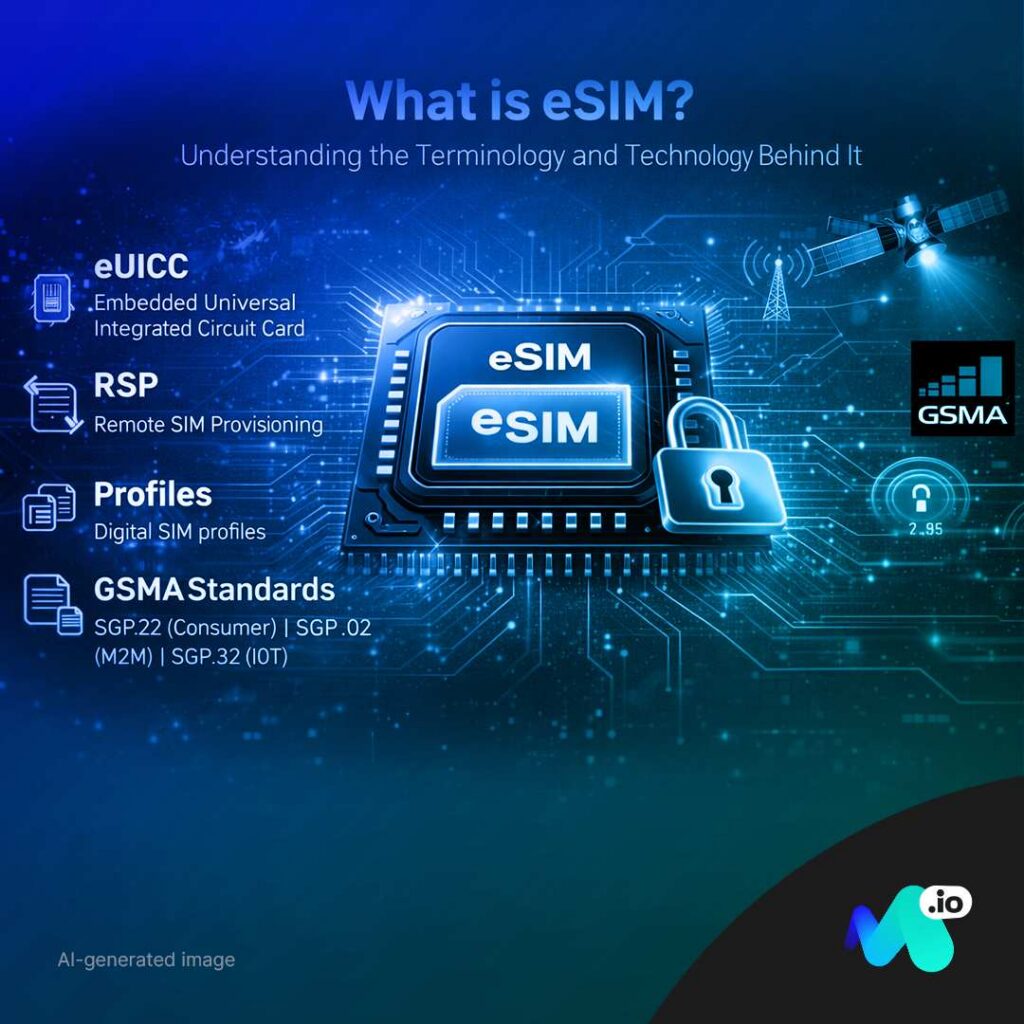
- eUICC (Embedded Universal Integrated Circuit Card): The secure chip inside your device that stores multiple SIM profiles.
- Remote SIM Provisioning (RSP): The process of downloading and managing SIM profiles over-the-air (OTA), eliminating the need for physical SIM swaps.
- Profiles: Digital representations of mobile network subscriptions that can be activated or switched remotely.
- GSMA Standards: Frameworks like SGP.22 (Consumer), SGP.02 (M2M), and SGP.32 (IoT) define how eSIM works across different use cases.
Why eSIM matters:
Unlike traditional SIM cards, eSIM enables:
- Space Efficiency: Ideal for compact devices like wearables.
- Durability: No physical slot means better waterproofing and dust resistance.
- Security: Hardware-based encryption ensures tamper resistance.
Conclusion:
eSIM is more than a trend—it’s a foundational technology for the future of connectivity. Understanding its terminology is the first step toward leveraging its full potential.
Get started now with our IoT SIM plans
Our competitive data rates are designed for businesses operating across Europe, the UK, the USA, China and beyond — without any additional roaming fees.
IoT SIM
€5 per GB pay per use in over 60 countries
Optional eSIM with activation via QR code or LPA URL
Lifetime IoT SIM
1 GB, 100 SMS
10 years for a one-time fee of €10