Growth, Market Priorities and New Services
Key Takeaways from melita.io’s Cologne Strategy Meeting
11 November 2026
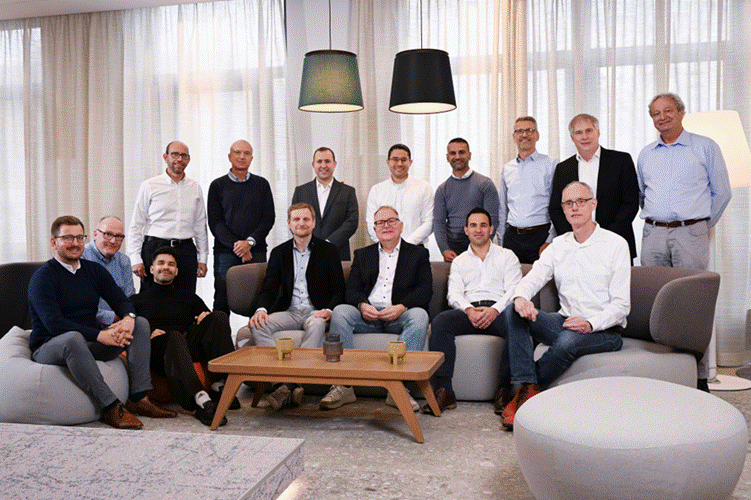
melita.io leadership and IoT experts are meeting in Cologne to plan the next phase of their IoT strategy. The agenda covers market expansion, SGP.32 eSIM, M2M voice, product innovation training and customer support.
This week melita.io is bringing its team together in Cologne, Germany, for a strategy meeting on the company’s next phase of growth. The focus is clear: how melita.io can keep growing, strengthen its network and deliver even more for its customers.
The team is reviewing the markets, technologies, partnerships and service standards that will shape melita.io’s IoT SIM card and M2M SIM card business in the years ahead.
Expanding our IoT markets and reach
Growth is at the top of the agenda. melita.io is expanding its presence in new markets and industries and extending its coverage and partnerships so customers can deploy IoT wherever they do business.
Market priorities
The meeting also looks at the opportunities in the IoT market. Demand is growing in areas such as smart energy, security systems, fleet tracking and industrial IoT, and melita.io plans to launch SGP.32 eSIM and M2M voice soon. The team is focusing on where melita.io can add the most value for its customers in these areas.
A key part of that work is making sure melita.io, Crout and Digital SIM operate as one strong IoT ecosystem. Each brand brings its own expertise, and together they can create more opportunities for partners and customers in every market they serve. melita.io is also a partner in 2CoreSIM, the dual-core SIM developed by Crout with Telefónica Deutschland and Kigen. 2CoreSIM was shortlisted at the IoT Global Awards 2026 and was a finalist in the Glotel Awards 2026.
SGP.32 eSIM
melita.io already provides eSIM based on SGP.22. Launching SGP.32, the GSMA eSIM standard built for IoT, is one of the priorities discussed in Cologne. It will let customers provision and switch connectivity profiles remotely and at scale. SGP.32 is in the pipeline and will be launched soon.
M2M voice
M2M voice is the next addition to melita.io’s IoT services. It will let customers add voice to devices such as lift emergency phones, alarm panels and intercoms.
Team building and product innovation training
The meeting is also a chance for melita.io’s team to learn and connect. Hands-on training sessions cover the latest products and innovations, so every team member can advise customers with confidence. Team-building activities strengthen collaboration across countries, which helps melita.io work as one team wherever its customers are.
Delivery and customer support
Customer experience is high on the agenda. melita.io’s customers already count on its service, and the team is looking at how to keep improving it, from delivery and response times to proactive help from IoT specialists who know each deployment.
“As a licensed MNO, we keep investing in the resilience and security of our network and in the support we give our customers. Our aim is simple: reliable IoT connectivity, backed by a team that knows our customers’ deployments,” say Alistair Castillo, Chief Technology Officer and Frank Thelen, Chief Operations Officer.
Looking ahead
As a licensed mobile network operator (MNO) with more than 30 years in telecoms and over 300 roaming agreements, melita.io is building global IoT connectivity that is reliable and fully supported.
The discussions in Cologne are already setting clear priorities and building momentum. Thank you to everyone who has travelled to take part. We look forward to sharing the progress that comes next.
Frequently asked questions
What is an IoT SIM card?
An IoT SIM card connects devices such as trackers, sensors, meters and alarms to mobile networks. A melita.io IoT SIM card works across multiple networks globally, with automatic failover if a network becomes unavailable.
What is the difference between an IoT SIM card and an M2M SIM card?
The two terms are often used interchangeably. M2M (machine-to-machine) SIM card is the older term, used for devices such as alarms, meters and payment terminals that send data to a central system, often in one country and on one network. An IoT SIM card is the modern version, built for large fleets of devices that may be deployed in many countries. It typically adds access to multiple networks with automatic failover, remote management of the whole fleet and support for eSIM standards such as SGP.22 and SGP.32.
What is SGP.32 eSIM?
SGP.32 is the GSMA eSIM standard designed specifically for IoT. It lets businesses provision and switch connectivity profiles on IoT devices remotely and at scale, without manual intervention. melita.io already provides eSIM based on SGP.22, with SGP.32 in the pipeline and launching soon.
Read the news: melita.io Leaders Plan the Next Phase of Growth at Cologne Strategy Meeting [link to news item]
#melita #melitaio #Crout #DigitalSIM #IoT #IoTSIM #M2MSIM #eSIM #SGP32
Get started now with our IoT SIM plans
Our competitive data rates are designed for businesses operating across Europe, the UK, the USA, China and beyond — without any additional roaming fees.
IoT SIM
€5 per GB pay per use in over 60 countries
Optional eSIM with activation via QR code or LPA URL
Lifetime IoT SIM
1 GB, 100 SMS
10 years for a one-time fee of €10